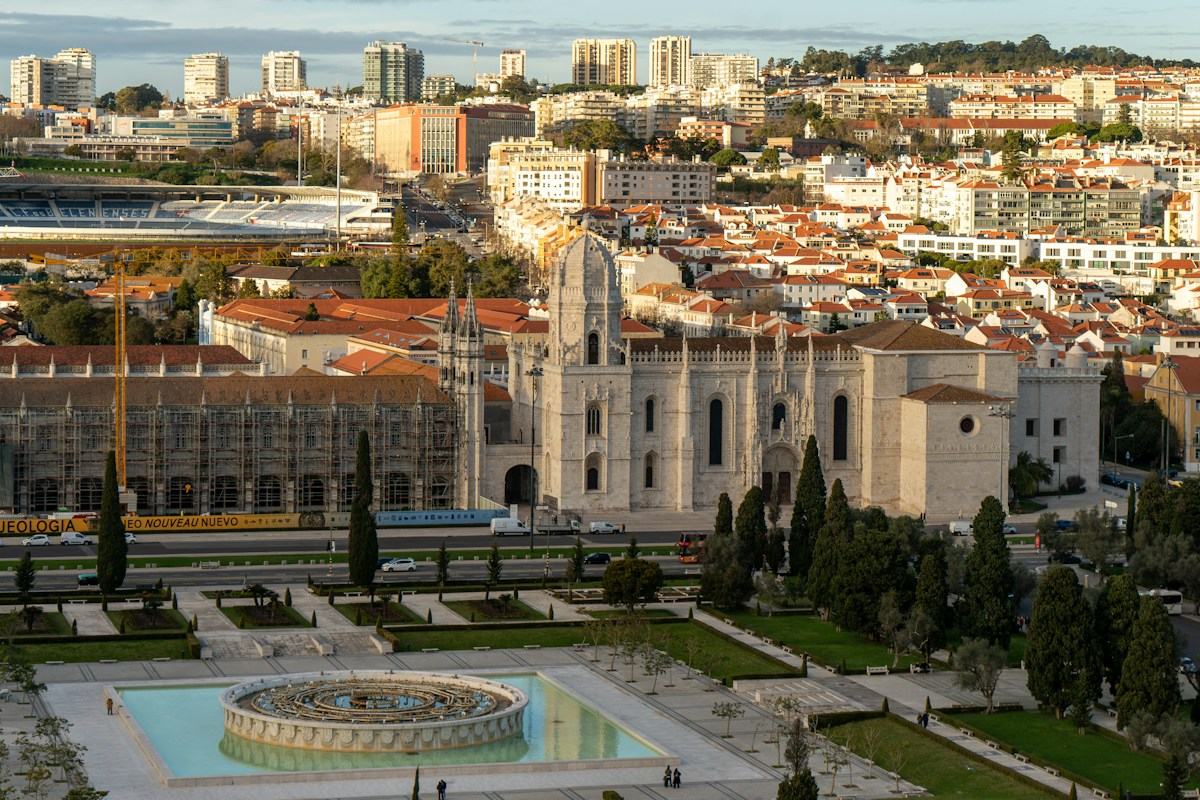
A monastery is a poor place to arrive already watching the clock. When I plan a first visit to Jerónimos, I give the building one clear job: to be the main event of a Belém morning. The pastry stop, the river, and the next museum can wait. That small decision changes the whole day. Instead of asking how many famous places fit around the ticket, I ask what would make the visit feel unhurried once I am inside.
- Area
- Belém
- My planning allowance
- A flexible half-day
- Check before leaving
- Cloister and church arrangements separately
- Best fit
- Architecture, detail, and a slower morning
Decide what you actually want to see
The name Jerónimos can hide two different plans: visiting the cloister, and entering the church. The official visitor page lists them separately, with different hours; Sunday church access also differs from the weekday arrangement. Monday is a closing day. Check both spaces before choosing a date; a pin on the map cannot tell you which doors are open.
My preference is to start with an interest, however modest. Perhaps it is carved stone, the balance of an open courtyard, or the way a vast religious building controls light. One question gives the visit a shape. Without it, I find a famous building can become a very expensive exercise in moving toward the exit.
The booking sequence that removes avoidable doubt
I begin at the monument's official Visit page, which recommends buying ahead because tickets can sell out. My booking sequence is short enough to check on a phone:
Advance purchase is not a promise of immediate entry. Buying the ticket, passing admission control, and joining any door queue are different stages. If a seller says skip the line, I want to know which line. My itinerary keeps spare time even after payment.
- Open the official Visit page and follow its Tickets link.
- Select Jerónimos, the correct admission category, and the intended date; choose an entry time if the current product requires one.
- Read the inclusions and conditions, then check visitor details and the final total before paying.
- Save the admission ticket and confirmation offline; a payment receipt alone may not be the ticket needed at the door.
A real constraint: the monument can serve the state, too
The official visitor information says Jerónimos may close for occasions connected with Portuguese state representation. This documented exception explains why the weekly timetable is only the starting point. The evening before is a good moment to recheck current notices, especially when this is the attraction determining the day's journey.
This is also why I avoid putting another nonrefundable booking directly after a major monument. A delayed entry should cost me a little flexibility, not the price of a second ticket. If visiting Jerónimos is nonnegotiable, I give it room. If it is merely one option, I keep the rest of Belém possible without it.
A planning example: four hours without four reservations
Suppose two first-time visitors have a morning free and lunch booked back in central Lisbon. This is a planning example, not a reported visit. I would ask them to choose either a concentrated monastery visit or a wider Belém wander. Trying to promise both in a tightly measured window makes the return journey the most important part of the morning.
The concentrated version starts with a monument reservation, a simple coffee stop on either side, and an optional river walk. The wider version makes the exterior and neighbourhood the focus, adding an interior only if access and time fit. Neither needs a tower ticket simply because the tower is nearby.
Give yourself a way to look
My favourite exercise for an ornate building is to choose one detail before taking the wide photograph. Look for a repeated shape, follow it across more than one surface, then step back to see its place in the whole. You do not need specialist vocabulary to notice repetition, shadow, or a change in scale.
I also like separating the photography minute from the looking minute. Put the phone away for one complete circuit of a small area. A place becomes more memorable when it is allowed to be something other than a background. In the church, worship and the entrance rules take priority over conversation and photography.
Plan the end as carefully as the beginning
The monument's access information distinguishes the accessible ground-floor cloister and church from the first floor of the cloister, which is not wheelchair accessible. If stairs or standing are difficult, I would contact the monument before buying and choose a visit that works on its own terms. A companion's stamina also deserves a place in the plan.
Before leaving central Lisbon, I save the return stop and a second transport option. At the end of the visit, I decide whether the group wants food, a seat, or another sight. The answer can be a seat. I would rather finish Belém with one building remembered clearly than with six hurried photographs and an argument about lunch.
A FEW USEFUL ANSWERS
Frequently asked questions
Should I buy my Jerónimos ticket before arriving?
Yes, advance purchase is sensible because the official visitor page warns that tickets can sell out. Start with its Tickets link, check the monument, admission category and date, then save the actual admission ticket offline. Buying ahead does not guarantee immediate entry, so leave a buffer before your next reservation.
Do the church and cloister have the same visiting hours?
No. The official visitor information gives separate arrangements for the church and cloister, and Sunday church access differs from weekdays. Monday is a closing day. Check both spaces for your intended date, then recheck current notices before leaving; special occasions can also affect access.
How much time should I leave for Jerónimos and the surrounding area?
A flexible half-day is this guide's suggested allowance for the monastery, a simple food stop and some optional outdoor time. It is a planning recommendation, not a promised visit duration. Choose the main interior first and keep the river walk adjustable, especially if you have lunch or another booking elsewhere.
Is the whole monastery accessible without stairs?
No. The monument lists the church and ground-floor cloister as accessible to people with reduced mobility, but the first-floor cloister is not wheelchair accessible. Contact the monument about your particular needs before buying. Plan a visit that works with the accessible spaces rather than assuming every level has the same access.
Sources & useful links
Checked 29 October 2026. Confirm opening times, fares, and booking conditions with the operator before setting out. Published experiences belong to the people credited below.
- Jerónimos Monastery — official visitor information, tickets and accessibility ↗
- Museus e Monumentos de Portugal — Jerónimos Monastery ↗