For a first walk in the historic centre, I like a route with an obvious direction. Start beside Alameda Central, follow Madero towards the Zócalo and decide there whether you want to continue into Templo Mayor. The city has enough layers without asking you to enter every building.
- Start
- Alameda Central and the Bellas Artes exterior
- Main thread
- Madero east towards the Zócalo
- Optional anchor
- Templo Mayor's archaeological site and museum
- Allow
- A half-day with pauses; longer if adding museum time
THE ROUTE, AT A GLANCE
- Alameda CentralBegin with a short pause and confirm your eastward route.
- Palacio de Bellas Artes exteriorKeep the interior optional and use the marked road crossing.
- MaderoFollow the pedestrian street east, pausing clear of the main flow.
- ZócaloFollow current public access and choose whether to extend the visit.
- Templo MayorAn optional archaeological and museum visit with its own admission and calendar.
An outline to adapt on the day. Allow for access, weather, and your own pace.
Start with a line you can remember
Save four places before leaving: Alameda Central, Palacio de Bellas Artes, the Zócalo and Templo Mayor. They form a useful west-to-east sequence, with Madero doing much of the connecting work. Choose the arrival connection that suits your accommodation, then begin near Alameda. There is no need to travel across the centre simply to start at a particular corner if you are already staying along the route.
My aim on this first walk is to make the names attach to places. The centre contains far more than one morning can explain, and a route that constantly doubles back can blur it into a collection of facades. A clear direction helps you notice changes: a park, a prominent cultural building, a busy pedestrian street and an immense civic space.
Use Alameda as the place to settle in
Begin with a short circuit or pause in Alameda Central, then move towards the exterior of Palacio de Bellas Artes. Decide here whether the morning is primarily a walk or a museum visit. Entering a major institution can be worthwhile, but it changes the time available later. I would keep Bellas Artes as an exterior stop on this version and reserve an interior visit for a separate, checked plan.
The city's official Alameda–Madero route is a useful model: it links a sequence of buildings and public spaces rather than demanding admission at every stop. It includes places such as Bellas Artes, the San Francisco complex and Casa de los Azulejos. I borrow that continuity, not the obligation to study each address. One detail that holds your attention can be more memorable than ten hurried photographs.
Cross carefully, then let Madero connect the walk
Use the marked crossing at the busy road between the Bellas Artes area and the beginning of Madero. Once on the pedestrian street, continue east towards the Zócalo. Keep an eye on where the walking route meets other streets rather than assuming the entire centre is traffic-free. Pause at the edge when you want to consult the map, leaving the main flow open.
Look above the shopfronts as well as into them. This is where I would slow down, choosing a doorway, an upper facade or a change in the street's width as a subject. There is no need to label every building correctly on the first pass. If one place interests you, save its name for later; curiosity can continue after the walk rather than interrupting it every few metres.
Let the Zócalo change the scale
When Madero opens towards the Zócalo, stop and orient yourself before choosing the next edge of the square. Public events, barriers and temporary access arrangements may change the route on a particular day. Follow the actual open pedestrian paths instead of insisting on a line drawn earlier. A large square is still a working civic space, not a guarantee of an unobstructed crossing.
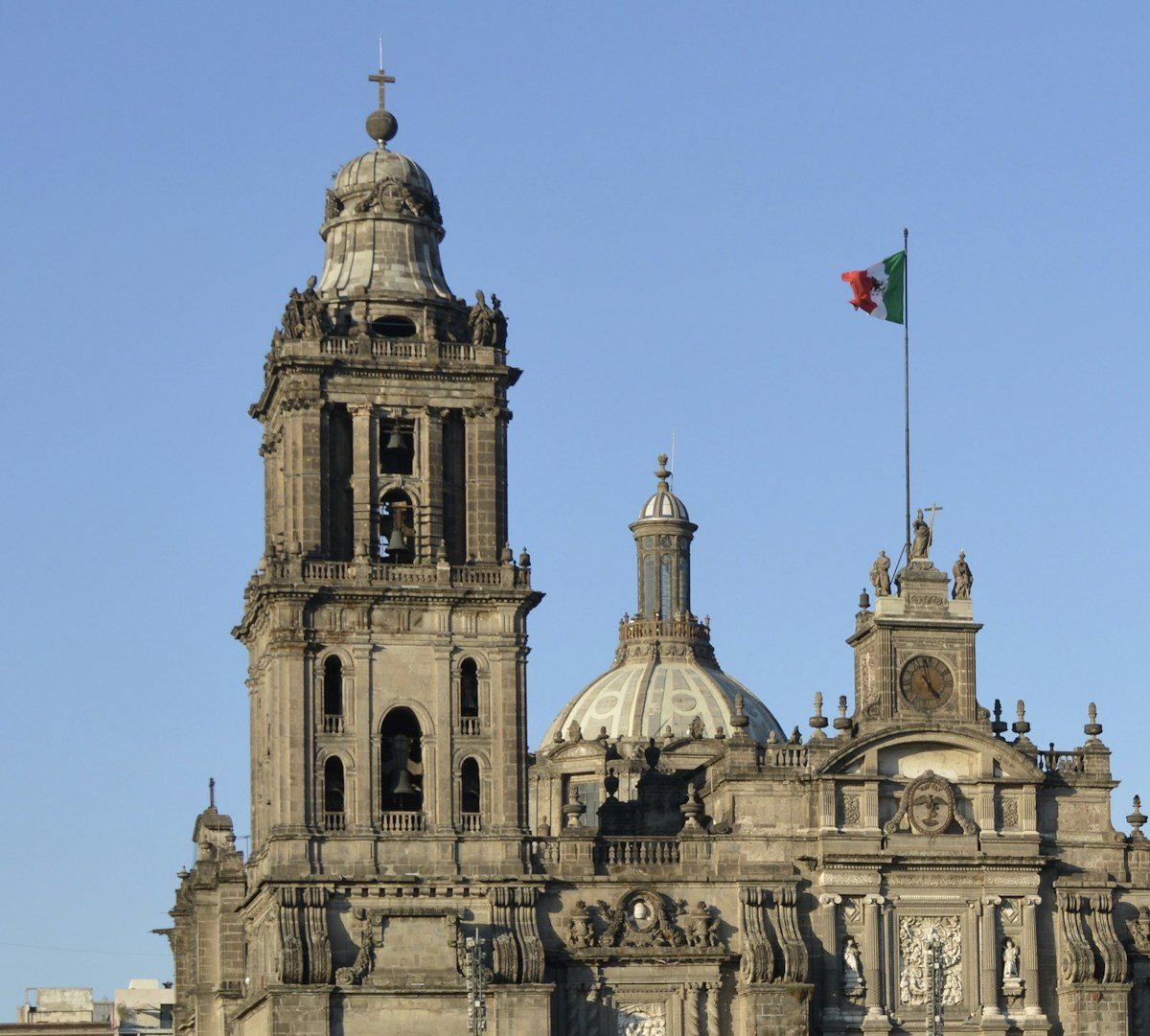
This is a good point to decide whether you want lunch, a return journey or the museum extension. Entering the cathedral or another institution is a separate choice with its own visitor arrangements. I would avoid making every visible doorway compulsory. The contrast between the narrow approach and the broad square already gives this walk a satisfying change of scale.
Give Templo Mayor a proper chapter
Templo Mayor lies by the northeastern side of the Zócalo area. Its official INAH information describes both the archaeological site and museum, and lists a regular Monday closure. Check current notices and admission information before planning to enter. Seeing some remains from outside is not the same experience as taking the full visitor route and spending time with the museum's interpretation.
The official archaeological account explains that successive enlargements preserved earlier structures within the expanding temple. That offers a strong question for a visit: what does it mean to build a new centre of power around an older one? I would use that idea to connect the exposed remains with the objects inside, rather than treat the ruins as a quick photograph at the end of Madero.
A good route can end in two places
Imagine a planning example: a pair reaches the Zócalo after a slow morning of looking and stopping. One still wants the museum; the other would prefer lunch. They can move the museum to another day, or agree on a clear meeting arrangement if they separate. Extending a walk is useful only while it remains enjoyable. The optional stop should stay optional.
Before leaving, check the return connection from where you actually finish, including any station or street access changes. Keep a short alternative in mind if rain or a public event alters the route. My preferred souvenir from this walk is a simple mental map: park to pedestrian street, street to square, and an older city revealed beside it.
A FEW USEFUL ANSWERS
Frequently asked questions
Do I need admission tickets for the whole walking route?
No. The route through public streets and spaces does not require a combined ticket. Bellas Artes interiors, Templo Mayor and any other institution you choose to enter have their own arrangements. This version treats Bellas Artes as an exterior stop and keeps Templo Mayor optional so the walk remains easy to shorten.
Is Templo Mayor open on Mondays?
Its official INAH visitor information lists Monday as the regular closure day. Check current notices before planning your visit. You can still use the public-street part of this itinerary when access permits, but do not treat an exterior view of the remains as equivalent to entering the archaeological site and museum.
Can I walk directly across the Zócalo whenever I arrive?
Do not assume the same access every day. Public events, barriers or temporary arrangements can affect the square and surrounding streets. Follow the open pedestrian paths and current instructions when you arrive. The route still works if you change the edge you follow or finish earlier rather than forcing a saved map line.
Should I visit Bellas Artes and Templo Mayor on this first walk?
Choose according to your interest and time, but this guide recommends avoiding two rushed interiors. Keep Bellas Artes as an exterior stop and give Templo Mayor a proper chapter if you want the extension. Alternatively, enter Bellas Artes and leave the archaeological visit for another day after checking both institutions separately.
Sources & useful links
Checked 29 October 2026. Confirm opening times, fares, and booking conditions with the operator before setting out. Published experiences belong to the people credited below.
- Mexico City tourism — Alameda Central and Madero walking route ↗
- Mexico City tourism — historic centre areas and landmarks ↗
- INAH Templo Mayor — archaeological site and visiting information ↗
- Mexico City tourism — walking and site guides ↗