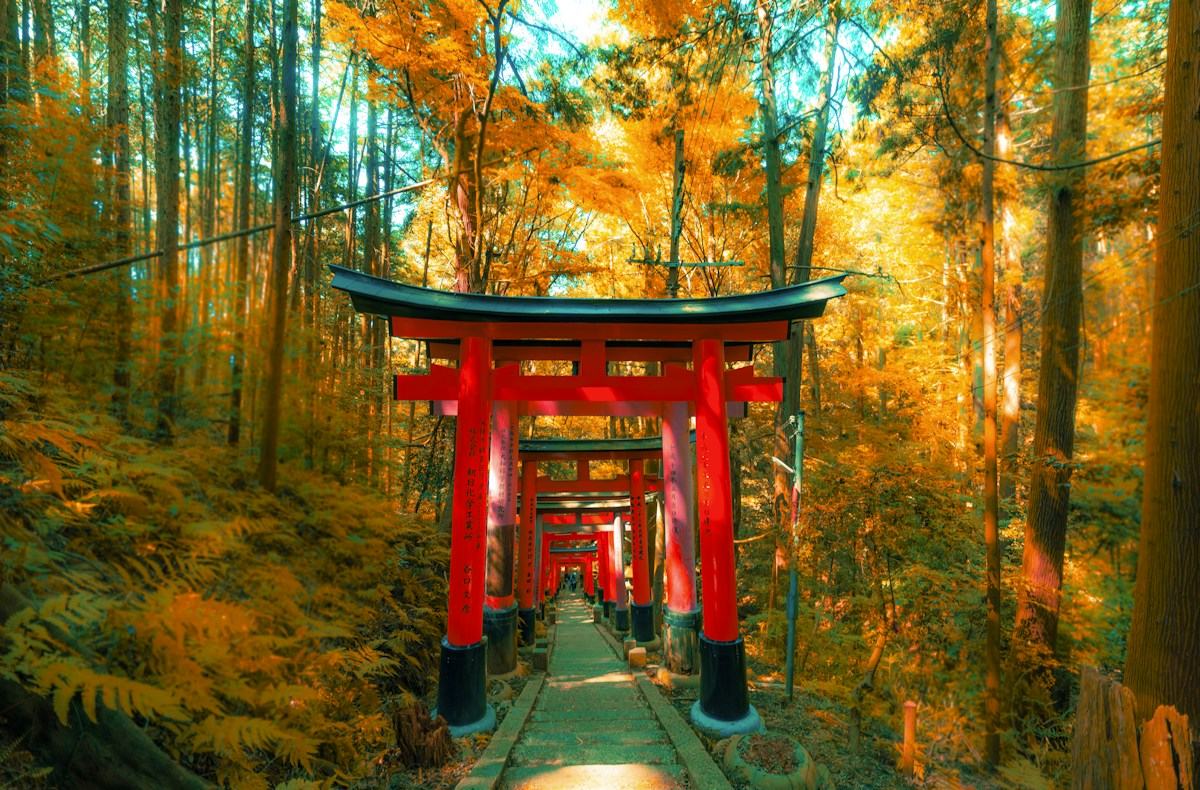
The torii are a compelling reason to visit Fushimi Inari. They are a poor reason to rush through it. I would arrive with one modest intention: understand how the shrine opens into the mountain, then choose how far to continue while the decision is still comfortable.
- JR arrival
- Inari Station on the Nara Line
- Keihan arrival
- Fushimi-inari Station, a separate station
- Visit choice
- Lower shrine visit or a longer mountain walk
- Main preparation
- A map, suitable footwear and a turning point
Choose the station that fits your starting point
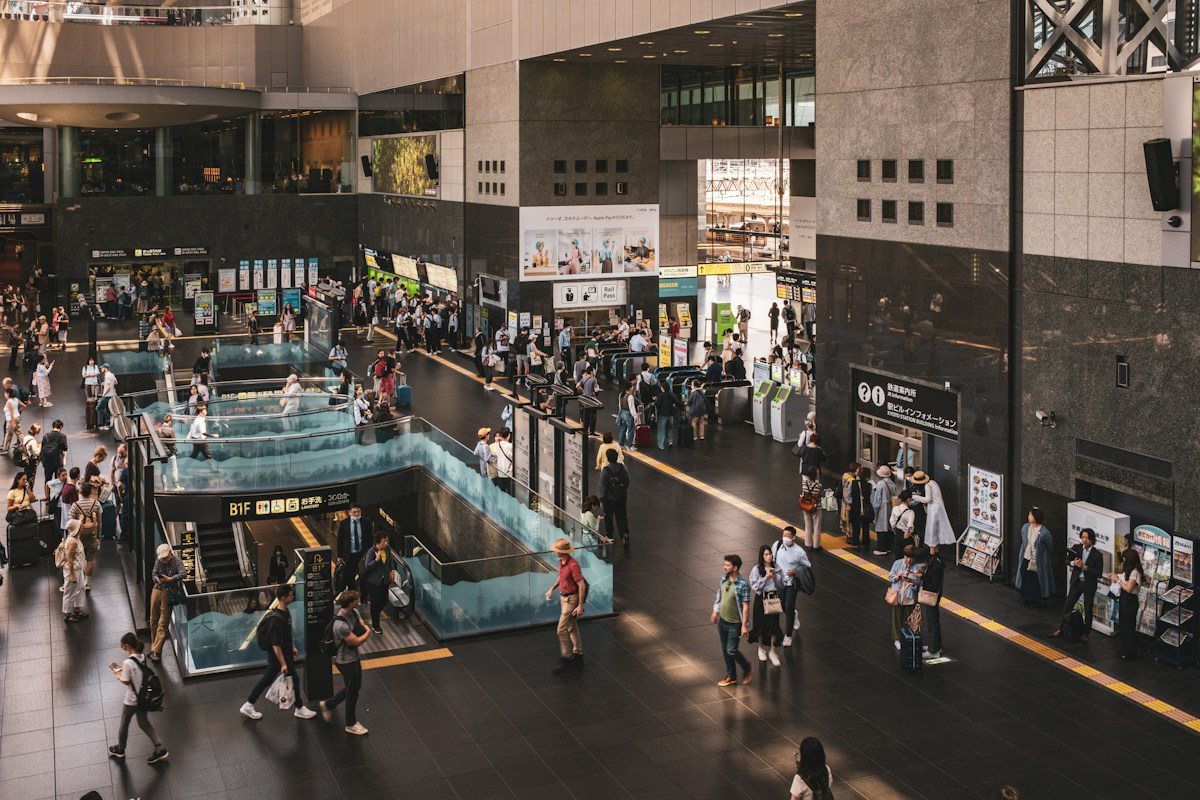
The shrine's official access page lists JR Inari Station on the Nara Line beside the shrine and Keihan Fushimi-inari Station to the west. These are different stations. From Kyoto Station, the JR option is straightforward to investigate; from a neighbourhood already served by Keihan, its station may be the more useful approach. Compare the whole journey rather than changing operators simply to reproduce someone else's itinerary.
Check that your selected train stops at the station you need and follow the platform information on the day. Save the return station name with its operator, especially if your outward and onward routes differ. Inari is a destination, not a guarantee that every service on a line will stop there. A few seconds checking the stopping pattern is less disruptive than correcting the journey later.
Begin where the visit begins
At the lower shrine, pause before entering the torii paths. Read the available information and notice where people are praying. A shrine is a working religious place, and the route is more meaningful when its most photographed feature is understood as part of that setting. Follow the instructions around worship spaces, keep entrances open and avoid using someone else's prayer as an opportunity for a close-up photograph.
I like to choose a question rather than a list of images: how does the mood change as the path climbs? That gives the walk a subject beyond finding an empty frame. There may be noise, queues and groups moving at different speeds near the best-known gates. None of that prevents a worthwhile visit, provided the plan does not depend on having a famous public place to yourself.
The mountain explains the gates
Fushimi Inari's own mountain guide describes Inariyama as sacred ground, with paths linking numerous places of worship and stone altars. The visitor route is part of a religious landscape extending beyond the compact gate corridor familiar from photographs. I would read it before deciding that the only goal is a summit or a specific picture.
Use the shrine's map to distinguish a lower visit from a longer mountain circuit. Do not translate a line on the map into a guaranteed easy walk. Steps, gradients, weather and pauses all affect the time and effort involved. Bring what you need for the version you choose, and do not assume refreshments or assistance will appear at exactly the point you want them.
Decide where to turn before you are tired
My preferred plan has a check-in point: after the initial shrine and torii section, stop in a place where you are not blocking the path and assess the group. How do the steps feel? How much daylight remains? Does everyone want the mountain walk? If the answer is uncertain, turning back is a complete decision rather than a failed attempt to earn the visit.
For a longer route, follow marked paths and current shrine notices. Keep enough time and energy for the descent, which still requires attention. A weather change should alter the plan, not merely the photographs. I would avoid attaching a tightly timed museum booking or cross-city dinner to the far end of a walk whose duration depends on several people's pace.
Let a photograph take less space
A useful camera habit is to look for a pause rather than manufacture one. Step aside where there is room, keep your equipment close and take the shot when the path naturally clears. If it does not, accept a frame with people in it. Asking a stream of visitors to stop so that one image looks deserted reverses the relationship between a shared place and its photographer.
Kyoto's responsible-travel guidance also asks visitors to respect photography restrictions and private property. That principle applies beyond the famous entertainment districts. Signs at worship spaces take precedence over a picture you saw online. Longer lenses, tripods and posed groups can occupy more space than their users realise; if the setting cannot accommodate them, simplify the picture or put the camera away.
Two endings can both be right
Consider a hypothetical pair with different priorities: one wants to understand the shrine, the other enjoys a longer walk. They can explore the lower area together and agree on whether to continue, rather than silently assuming the summit is compulsory. If they split up, set a clear meeting point, time and contact plan. The shared part of the visit should remain enjoyable for both people.
After returning, choose the onward connection deliberately. Continuing north on Keihan may suit an eastern Kyoto plan, while JR can return you towards Kyoto Station. Check the actual service instead of automatically retracing every step. I would leave the next activity flexible enough for lunch or rest: the mountain deserves a little room after it as well as before it.
A FEW USEFUL ANSWERS
Frequently asked questions
Should I use Inari Station or Fushimi-inari Station?
Choose the one that fits your starting point and onward journey. Inari is the JR station on the Nara Line beside the shrine; Fushimi-inari is the separate Keihan station to the west. Check the selected train's stopping pattern and save the station name with its operator to avoid confusion on the return.
Do I have to climb the whole mountain?
No. A lower shrine visit is a valid choice, and the longer mountain walk is optional. Use the official map to decide what suits your group's energy, mobility and available daylight. Reassess before committing to more climbing, and remember that a comfortable descent still needs time and attention.
Can I rely on finding an empty torii corridor early in the day?
No time guarantees an empty corridor. Choose a start that suits the weather, daylight and transport, then allow other visitors to remain part of the scene. Take photographs without blocking the path, and follow restrictions around worship spaces. A good visit does not depend on recreating a deserted image from social media.
What should I arrange before splitting up for a longer walk?
Agree on a precise meeting point, a realistic time and a way to contact each other. Make sure both groups understand their route and return connection. Splitting up should be a deliberate choice, not the result of someone disappearing ahead; keeping the lower visit together can give everyone a useful shared experience.
Sources & useful links
Checked 29 October 2026. Confirm opening times, fares, and booking conditions with the operator before setting out. Published experiences belong to the people credited below.
- Fushimi Inari Taisha — official access information ↗
- Fushimi Inari Taisha — Inariyama sacred mountain ↗
- Fushimi Inari Taisha — shrine and worship questions ↗
- Kyoto Travel — responsible travel and photography ↗