My first Kyoto decision is about the last few hundred metres. A train can put you near a neighbourhood while leaving you on the wrong side of a large station, with a suitcase and an uphill walk. Start with the front door and work backwards.
- Start
- Kyoto Station, after leaving your arriving train
- Best first check
- The accommodation's exact entrance and luggage arrangements
- Rail option
- Karasuma subway for the central north–south corridor
- Plan B
- A station taxi or verified luggage service
Find the door before choosing the train
Save your accommodation's full address in Japanese as well as English, its entrance pin and its check-in instructions. A neighbourhood label such as Gion or downtown is too broad to choose the final connection. An apartment may also have a different key-collection point. Those are details to resolve while you still have a booking confirmation open, rather than outside a locked building.
Compare the walk from the nearest useful station with the complete taxi journey. I count changes, stairs and luggage handling as costs alongside the fare. A direct ride can make sense for several travellers with bags; a straightforward subway journey may be easier when you are travelling lightly and the hotel is close to its exit. Neither option needs to become a test of travel competence.
Inside the station, follow one operator
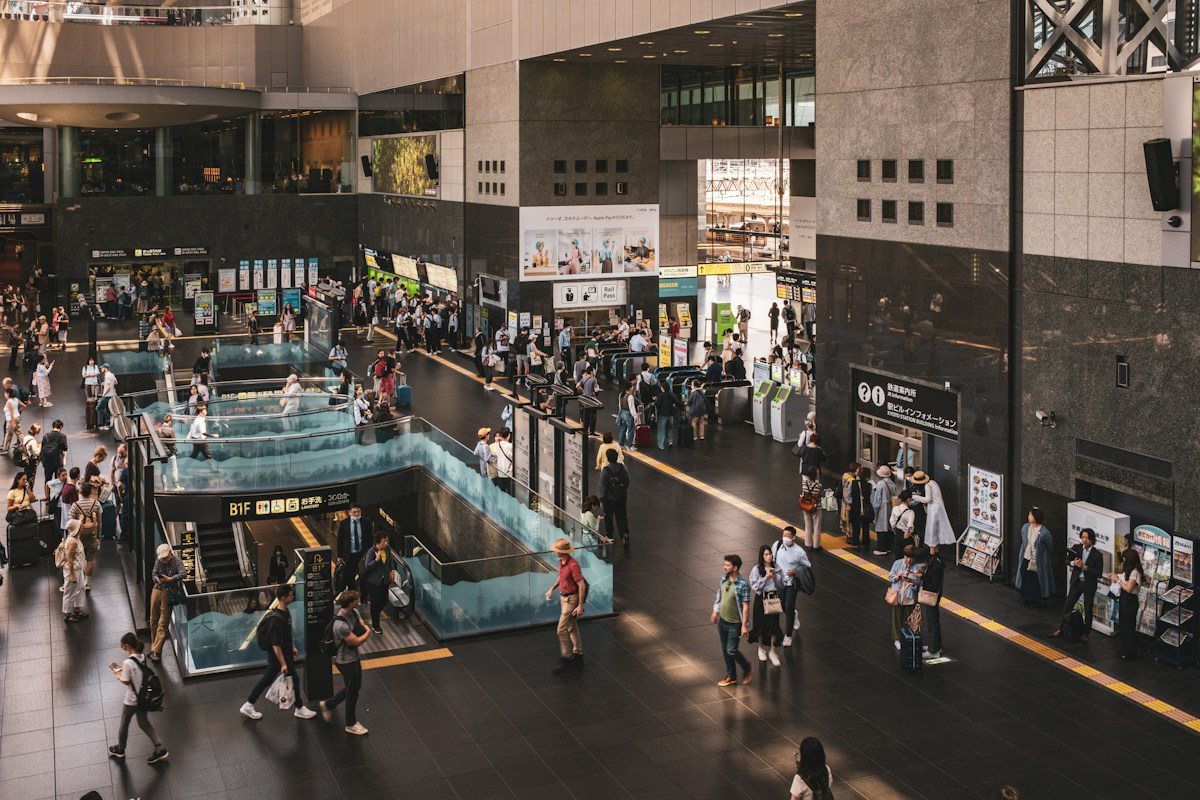
Kyoto Station brings together JR trains, the Shinkansen, Kintetsu and the municipal subway. The north side is the Karasuma side; the south side is the Hachijo side. Before following a generic exit arrow, decide whether you want a subway transfer, a taxi rank or an address outside. Kyoto Travel's station guide is useful precisely because it treats these as different movements through the building.
For the subway, follow the Karasuma Line signs and check the platform direction against your destination. Do not assume your arriving rail ticket includes the next operator. If a barrier rejects a ticket or card, ask the staff rather than repeatedly trying different gates. Keep everyone together until the transfer is understood, then move clear of the main stream before repacking or consulting a map.
Use the railway where it actually helps
The Karasuma subway runs north from Kyoto Station through Gojo and Shijo towards Karasuma Oike. At Karasuma Oike it meets the east–west Tozai Line. For an address around Shijo–Karasuma, the direct subway is an obvious option to compare. Shijo is the subway station name; nearby Karasuma is the Hankyu station name. Matching the operator prevents a surprisingly easy navigation mistake.
For accommodation farther east, look at the actual walking connection after the train. Higashiyama subway station is not a universal stop for every hotel in Higashiyama, and it is not the entrance to Kiyomizu-dera. A transfer followed by a substantial walk can be less attractive than it looks on a network diagram. My rule is to inspect the last street before accepting the suggested route.
A useful alternative already exists
Kyoto's official Hands Free Kyoto service information describes luggage storage and delivery between the station and participating accommodation. This is a documented local response to crowded transport, rather than a theoretical packing tip. The city also asks visitors to avoid bringing large luggage onto crowded buses, where it takes space needed by other passengers.
Check the individual provider's acceptance deadline, destination coverage, delivery time and collection procedure before handing anything over. Keep medication, valuables and what you need before delivery with you. Storage and delivery solve different problems: storage means returning to collect the bag; delivery means confirming that someone at the destination can receive it. I would choose only after making that distinction explicit.
The same station, two sensible plans
Consider a planning example: two visitors arrive before check-in with large cases and a hotel near Shijo. If the hotel accepts early luggage, they can take the subway or a taxi there, leave the bags and begin the day locally. If reception cannot receive them, confirmed station storage may be the better first step. The accommodation's answer determines the next step.
Now give those visitors an apartment on a narrow eastern street and self check-in after dinner. A luggage service might not accept that unattended destination. In that case, keep a collection plan at the station or arrange the arrival directly with the host. The cheapest-looking connection is of little value if it leaves you carrying the cases around a temple approach all afternoon.
Make tomorrow's departure easier too
At the accommodation, save the station entrance or taxi drop-off you actually used. Note whether there were stairs and which side of the road worked. That small record is more useful for the return journey than remembering that the hotel was 'near a station'. Before taking a late-night connection, check the operator's current service information rather than relying on the daytime route you saved.
A FEW USEFUL ANSWERS
Frequently asked questions
Is Kyoto Station the same place as downtown Kyoto?
Kyoto Station is a major arrival hub, but it is not a substitute for your accommodation's exact address. Central neighbourhoods extend well beyond it. Save the entrance pin and compare the final walk from a useful station with a direct taxi journey, especially when carrying luggage or arriving before check-in.
Are Shijo and Karasuma different stations?
Yes. Shijo is the municipal subway station on the Karasuma Line, while Karasuma is the nearby Hankyu railway station. Their names can appear together in route instructions, but they refer to different operators. When arriving from Kyoto Station, follow the subway signs and check the direction and exit for your address.
Can I send my suitcase directly to any Kyoto hotel?
Do not assume every accommodation qualifies. Check a provider listed through Hands Free Kyoto for its destinations, acceptance deadline and delivery arrangements. Confirm that your accommodation can receive the bag. An unattended apartment may need another plan, and essentials should remain with you until delivery is complete.
Should I take a bus to my hotel with a large suitcase?
Compare a rail connection, taxi or luggage service first. Kyoto's visitor guidance discourages large luggage on crowded buses because space is shared with other passengers. The best choice depends on your exact address, bag size and final walk; a direct bus shown on a map is not automatically the easiest arrival.
Sources & useful links
Checked 29 October 2026. Confirm opening times, fares, and booking conditions with the operator before setting out. Published experiences belong to the people credited below.
- Kyoto Travel — finding your way inside Kyoto Station ↗
- Kyoto Travel — subway and railway connections ↗
- Hands Free Kyoto — storage and delivery providers ↗
- Kyoto Travel — luggage guidance ↗